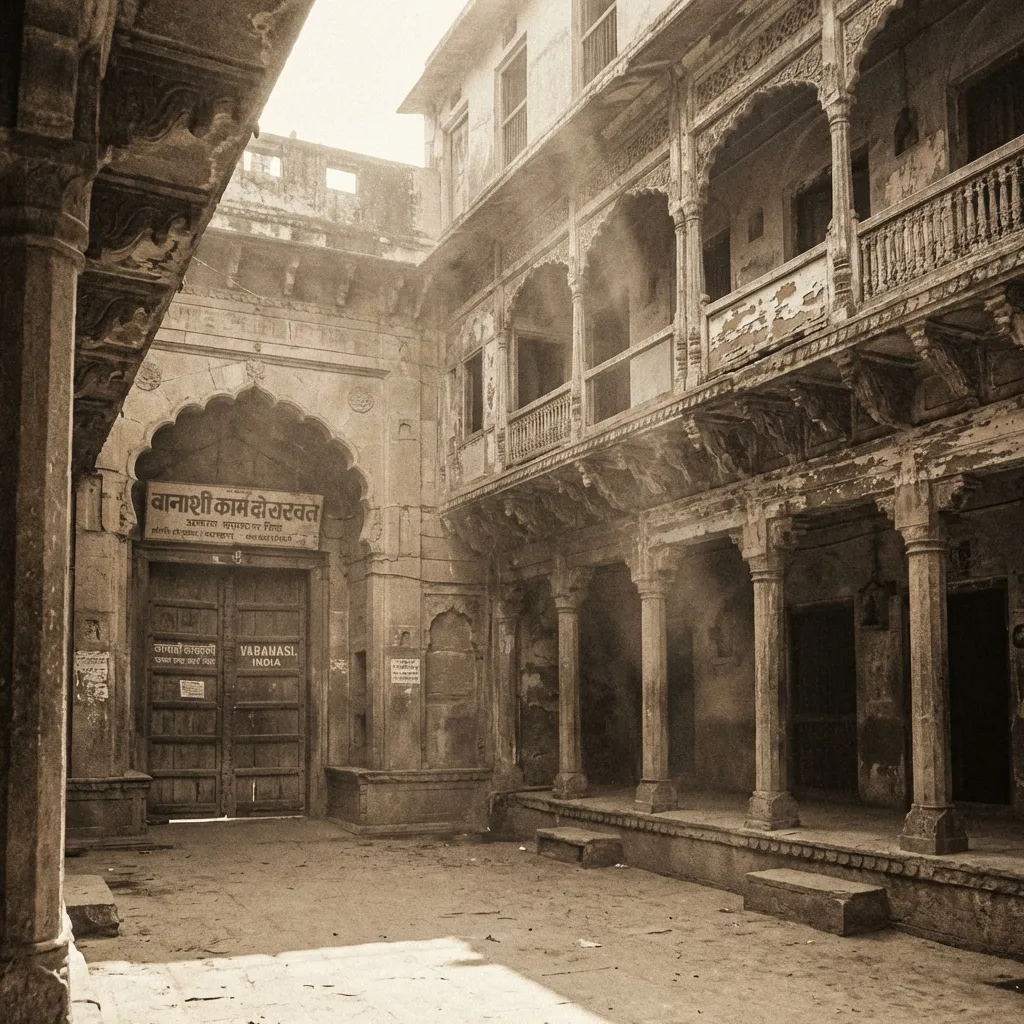
Gonu Babu Katra: The Bengali Legacy That Shaped Pandey Haweli and Modern Varanasi
Varanasi is often described as the world’s oldest living city—but to truly understand its character, one must look beyond temples and ghats, and into the quieter, lived-in spaces that shaped its social and cultural fabric. One such space is Gonu Babu Katra, nestled within the historic Pandey Haweli area, a landmark that carries the memory of an entire era of Bengali influence in Kashi.
The name Gonu Babu is not merely a navigational reference used by locals. It is a living imprint of a time when Bengali landlords, scholars, and patrons of the arts helped redefine the hospitality, intellectual life, and urban form of Varanasi.
Understanding the “Babu” Culture in Old Kashi
In the 19th and early 20th centuries, the term “Babu” carried far greater weight than it does today. In colonial-era India—especially in Bengal—Babus represented an educated, affluent class of landlords, administrators, and intellectuals. Many of these families migrated to Kashi (Varanasi), drawn by its spiritual significance and scholarly traditions.
These Bengali families were not transient pilgrims. They settled, built homes, and created institutions. Over time, entire neighborhoods in Varanasi—particularly around Pandey Haweli, Bengali Tola, Godowlia, and Assi—developed a distinctly Bengali character, earning the nickname “Mini Bengal.”
Gonu Babu was one such figure whose name became inseparable from the locality he inhabited.
Pandey Haweli and the Katra System
What Is a “Katra”?
A Katra historically referred to a gated residential or commercial enclave—often part of a larger estate. Unlike open marketplaces, Katras were inward-looking spaces, designed for controlled access, community gatherings, and large household operations.
Gonu Babu Katra was originally a private extension of a larger Bengali estate within Pandey Haweli. It functioned as both a residential hub and a cultural space, hosting gatherings, festivals, and visiting guests from Bengal.
Architectural Character of Pandey Haweli
Pandey Haweli stands apart from the narrow, congested lanes near the Vishwanath temple corridor. The area is known for:
- Large stone gateways
- Internal courtyards (aangans)
- High ceilings and open ventilation
- Multi-storeyed wooden balconies
This architectural openness was not accidental. It reflected a way of life that valued community, hospitality, and cultural exchange—qualities deeply associated with Bengali gentry of that era.
Bengali–Banarasi Fusion: A Cultural Synthesis
What makes Gonu Babu Katra unique is not just its Bengali origin, but how seamlessly it blended into Banarasi life.
Key Elements of This Fusion
- Language: Bengali spoken alongside Bhojpuri and Sanskrit
- Food: Bengali hospitality traditions merging with Banarasi culinary customs
- Arts: Patronage of classical music, poetry, and scholarly discourse
- Festivities: Large-scale gatherings during religious and social events
These Katras became natural venues for celebrations, feasts, and communal meals, long before the idea of modern catering services existed.
From Aristocratic Residence to Community Landmark
As decades passed, the original Bengali families either moved on or their estates were subdivided. However, the names endured.
Gonu Babu Katra transitioned from a private residential enclave into a mixed-use space, serving pilgrims, traders, and eventually the event and hospitality ecosystem of modern Varanasi.
Today, locals still use “Gonu Babu Katra” as a primary navigational reference, a rare honor that only historically significant spaces receive in Varanasi’s oral geography.
The Hospitality Ethos: Atithi Satkar in Practice
One of the most enduring legacies of the Bengali Babus in Kashi was their interpretation of Atithi Satkar—the sacred duty of hospitality.
Large Katras like Gonu Babu’s were often used as:
- Temporary shelters for pilgrims from Bengal
- Spaces for community meals (bhandaras)
- Venues for social and religious functions
This culture of organized hospitality, where food, space, and service were carefully managed, laid the cultural foundation for what would later evolve into professional catering and event services in the area.

Why Pandey Haweli Became a Catering & Wedding Hub
The transformation of Pandey Haweli and surrounding areas into a hub for weddings and catering was not accidental.
| Aspect | Historical Advantage | | :--- | :--- | | Space | Large courtyards ideal for gatherings | | Access | Proximity to Godowlia–Assi corridor | | Legacy | Long tradition of hosting large groups | | Skills | Generational knowledge of food & logistics |
The same architectural and cultural features that served Bengali families a century ago now support modern wedding catering, tent houses, and event planning.
Gonu Babu’s Legacy in the Modern Context
Today, when people speak of Prabir Caterer & Tent House, the association with Gonu Babu Katra is not incidental—it is foundational.
The business operates within a geography shaped by:
- Generations of large-scale hospitality
- Cultural sensitivity to diverse guests
- Deep local trust built over decades
What was once an aristocratic enclave has evolved into a space where tradition meets professionalism, carrying forward the spirit of service that defined the original Katras.
A Living Landmark, Not a Forgotten Name
In a city where lanes shift, buildings change, and time moves differently, very few names remain constant. Gonu Babu Katra is one of them.
It stands as:
- A reminder of Bengal’s influence on Kashi
- A symbol of cultural synthesis
- A living example of how heritage shapes modern enterprise
Conclusion: Heritage as a Foundation
The story of Gonu Babu is not a nostalgic footnote—it is a continuum.
From Bengali Babus hosting pilgrims in stone-walled Katras to modern catering teams serving weddings and celebrations, the underlying value remains unchanged:
"Hospitality is not a service. It is a responsibility."
That belief, rooted in Pandey Haweli and preserved through generations, continues to define the character of the neighborhood—and the businesses that operate within it.
Further Exploration
To visually experience the atmosphere and architectural character of Pandey Haweli, you may explore our gallery: 👉 Exploring the Streets of Pandey Haweli
Author Prabir Da Custodian of a legacy rooted in Pandey Haweli and Gonu Babu Katra
Ready to Plan Your Perfect Event?
Let Prabir Caterers bring 40+ years of experience to your special day